Showing posts with label Book Review. Show all posts

Monday, November 25, 2013

Messiah: Origin

Messiah: Origin. Matt Dorff (Adapter). Kai Carpenter (Illustrator). Mark Avey (Translator). Grand Rapids, MI: Zonderva. 2013. 176 pp. $19.99.

Just in time for the Christmas season comes Messiah: Origin from Zondervan. Merging scripture with a comic book-style format, the birth and early life of Christ makes this the first book in what promises to be a serial graphic adaptation of a Gospel harmony, though I am unaware of how many more volumes the authors intend to produce. The book features a fresh translation of the Bible text set in a backdrop of artful illustrations. Unlike other Bible-turned-comic-book products, Messiah: Origin does not deviate from the text of the Bible or abridge the text. In that aspect it is more like the Gospel of John film, whereas its illustrations are more worthy of a comparison with Mel Gibson's high quality production The Passion of the Christ. Because of duplication between the Gospel narratives, it is not a full harmony of the Gospels, but it does combine them into one unified story.

The book's arrangement of the biblical material is excellent. It's begins with the prologue from the Gospel of John and then moves into the birth announcements and infancy narratives of John the Baptist and Jesus. Of special note is the placement of the Magi's visit after the temple dedication. While it is popular to portray the shepherds in the Magi visiting Jesus on the night he was born, a closer look at the narratives would suggest that the Magi came at some point after Jesus was dedicated in the temple, which was 40 days after he was born. The fact that the authors got this right makes the book a welcome addition to this season of Advent.

The illustrations are top notch and generally flow out of the passage instead of distracting from it. The depiction of Angels is interesting, but without any authoritative drawings, that aspect is open to artistic license. My one real criticism stems from the translation, not the art. At one point a term usually translated as baby is rendered "fetus." (Later he is referred to a baby.) Although the term "fetus" may be scientifically accurate, it is a bit of a loaded term in American society, and I would rather we use the term "baby" when referring to the unborn instead of "fetus."

I plan on sharing this book with visitors to my home this Christmas season as a discussion starter about not only the events of Jesus birth, but their significance as well. Although there are more volumes to come, this one can function nicely as a standalone book.

I received this book from the publisher for the purposes of review. The opinions expressed on my own.

Sunday, November 24, 2013

A Baptist's Old Testament Bible Survey

What the Old Testament Authors Really Cared About: A Survey of Jesus' Bible. Edited by Jason S. Derouchie. Grand Rapids, MI: Kregel Publications. 2013. 496 pp. $45.99.

Everyone needs a good Old Testament survey. Most whole-Bible surveys lack sufficient detail to be of much use to serious students of the Bible. Individual commentaries may contain too much detail. This book is a happy medium and a great place for laying a solid foundation of Old Testament understanding.

What Sets This Book Apart
There are four main characteristics that set this Old Testament survey apart from other volumes:

The first and most obvious distinction is that the book follows the order of the Jewish canon. Whereas Jews and Christians both accept the same books in the Old Testament, they arrange them in a different order. DeRouchie follows the order that would have been the most common in Jesus' day, commonly identified by three main sections, the Law, the Prophets, and the Writings. Although the order of the books is not divinely inspired, the Jewish division of the canon offers some helpful insight as to the purposes of these books.

The second most obvious distinction is the book's high-quality visuals. Full-color photographs adorn many pages throughout. The book also includes useful maps and charts. I especially liked the charts from the chapter on the Psalms. These images help reinforce each chapter's content and aid in comprehension.


Third, the Old Testament is presented in a well-rounded way. By this I mean that the authors are committed to the authority and truthfulness of the Old Testament and the purposes of each book are clearly presented and explained, not only in light of the original audience, but the Old Testament messianic expectation as well. Most Old Testament surveys do not emphasize the messianic link nearly as much as this one does.

Fourthly, although Kregel doesn't highlight this in their advertising, What the Old Testament Authors Really Cared About is a Baptist's Bible survey. That's not to say that people from other denominations or faith traditions won't appreciate or benefit from this survey. It is very "evangelical," though mildly Calvinistic. However, it is endorsed by a "who's who" of modern Baptistdom, including a number of Southern Baptists. Jason S. DeRouchie (PhD, The Southern Baptist Theological Seminary) is the main editor of this book and associate professor of Old Testament at Bethlehem College and Seminary (John Piper and Bethlehem Baptist Church).

Although I think the book's subtitle (A Survey of Jesus' Bible) more clearly presents the book's purpose, What the Old Testament Authors Really Cared about is a new favorite on my shelf.

I received this book from the publisher for the purposes of review. The opinions expressed on my own.

Side note: I took an Old Testament survey course this semester in seminary and I found this book to be much more enjoyable than my class textbook, and not just because I didn't have any homework from it. It really is a gem.


Sunday, November 17, 2013

Reading Philippians in light of its historical context: Rome

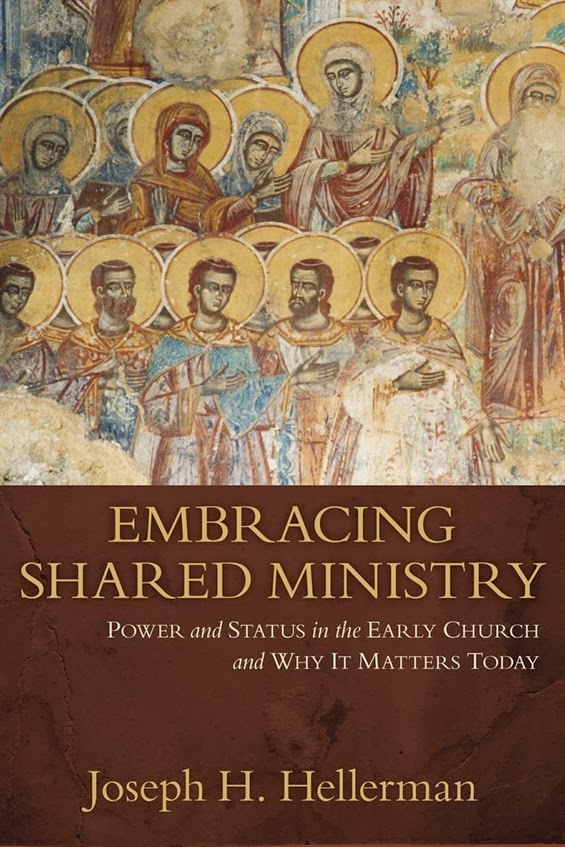
Embracing Shared Ministry: Power and Status in the Early Church and Why It Matters Today. By Joseph H. Hellerman. Grand Rapids, MI: Kregel Publications. 2013. 320 pp. (List price $17.99)


Joseph Hellerman offers profound insight into power and authority in first-century Roman society and the early church. He also offers some obligatory thoughts on their use in the church today. By far, the most important parts of this book are the first two sections dealing with Roman culture and the historical context of Paul's letter to the Philippians, a full 200 pages' worth.

When it comes to biblical interpretation, context is king. Understanding a biblical passage in light of its textual, historical, and cultural context is vital to achieving a personal understanding of the passage and correctly applying it to oneself and one's congregation. Hellerman's meticulous survey of power and authority, and specifically the honor culture, of Roman society in the first third of the book is solid gold. It squarely places the letter to the Philippians in context and provides detailed descriptions of Roman society that will help shed light on other passages and books in the New Testament. His descriptions of Roman parties and clothing as status symbols, drawn directly from first-hand accounts, will certainly color my reading of Paul's admonition to put off the old self and put on the new as well as James's admonition to not show partiality in the gathering of the church.

Further, his exegesis of key passages in Philippians in light of this historical context indirectly teaches how to apply historical and cultural context to our Bible reading, and directly expounds the Scriptures.

His last section on the church today left me a little disappointed, so I am basing my four-star review on the first two thirds of the book. This section did not have enough positive examples of church leadership to counteract the plethora of negative ones he gave. Additionally, he does not build strong link between this section and the first two, which seems to be a common problem for those of us with teaching ministries. It is necessary to highlight these links so others can arrive at the same conclusions.

Overall, I was blessed by the book, and plan on referencing it again and again for the historical perspective on Roman society.

I received a copy of this book from the publisher for the purposes of review.

Thursday, November 14, 2013

From the Author of The Pilgrim's Progress

Grace Abounding to the Chief of Sinners. By John Bunyan. Audiobook by christianaudio. Read by Simon Vance. 2013.


Next to the Bible, John Bunyan’s classic The Pilgrim’s Progress is probably one of the most widely read books of all time. Generations have been encouraged by this allegory of the Christian life, but few know much about its author. Bunyan was a Baptist minister in the 1600s who spent much time in prison for operating outside the authority of the state-supported Church of England. During this his imprisonments he wrote The Pilgrim’s Progress. Sometime before, in 1666, he wrote an autobiographical account of his journey to faith, Grace Abounding to the Chief of Sinners.

Bunyun’s autobiography touches on his life both before and after placing his faith in Christ, and he gives an explanation as to how he came into the ministry and ended up in prison for preaching the Word. Much of what he writes centers on his struggle to accept Christ, believing that his sins committed after coming to a knowledge of Christ were unforgiveable. He hoped that his struggle, as well as his ultimate rest in Christ, would be an encouragement to others who may have similar worries about becoming a Christian.

Reading a book written three hundred fifty years ago would pose some challenges because of archaic spelling and language, but listening to it read by Simon Vance eliminates or reduces most of these. The spoken word is much more intelligible, and gives a more contemporary feel to the book than you get from just reading it.

Christians should become familiar with the lives of faithful believers from times past. Bunyan’s autobiography is a rich resource giving insight not only into the events of his life, but also his thought processes and inner struggles as well. A welcome insight into the man who wrote The Pilgrim’s Progress.

Disclosure of material connection: I received a review copy of this work from the publisher.

Sunday, October 20, 2013

Book Review: Boot Camp

Boot Camp: Equipping Men with Integrity for Spiritual Warfare (The IMAGE Series). By Jason Hardin. DeWard Publishing Company: Chillicothe, Ohio. 2009. 240 pp.


Every once in a while I pick up a book that has an appealing cover, a good title, and a basic premise that resonates with me. Boot Camp is one of those books. Unfortunately, what comes after the cover left me deeply unsatisfied. I wish I could keep a bunch of positive praise on this book, and my negative reaction to it is not because of heresy or false teaching, but rather with the way the book is written. I can't believe I'm writing this, but the author uses too much Scripture.

I submit for you a photo of two pages in this book that are fairly representative of the amount of Scripture he includes with his writing. 
(Click to enlarge)

I admit that I've highlighted a quote from Isaac Watts, but it is still something that he has quoted and is not original to him. My main contention with the author is that I question whether or not he actually has anything worth saying on the subject. I estimate that at least 25% of the book is nothing but reprinted Scripture. There are many books available that list Scripture for various topics. The point of those books is to aggregate many Bible verses for quick and easy reference. There are other books available that speak to the issues that particularly apply to men. This book seems like an attempt to merge the two. Just as many people are not ready for Westerns with aliens, I am not ready for this kind of book.

I believe that everything we say should be heavily influenced by the Bible. But I think we would all feel a little cheated if our pastor came week after week and did nothing but read straight from the Bible during his sermon. At some point you would ask yourself, does the pastor have anything valuable to say? As I read through Boot Camp, I kept asking myself that question again and again. Does the author have anything to say? What is the point of writing a book if you have nothing original to say?

I was greatly excited about reading this book, but it this point I would recommend finding something else to read. Check out Every Man's Battle. Pick up The Character of Leadership. This one is not worth your time.

I received this book from the publisher for the purpose of review. The opinions expressed are (obviously) my own.
(The next two pages)

Monday, October 7, 2013

Book review: Bake through the Bible

Bake through the Bible: 20 Fun Cooking Activities to Explore the Bible Story with Young Children. By Susie Bentley-Taylor & Bekah Moore. The Good Book Company. pp. 64. 2013. (List Price $14.99 Paperback)

This eye-catching, easy-to-follow cookbook helps parents teach Bible stories in a refreshingly fun way. Each recipe includes the Bible story illustrated in a summarized version with review questions. Pictures illustrate each step. Children as young as 2 might enjoy making the recipes, but the book is really targeted at an audience ages 3 to 6.

As a preschool teacher, I loved the visual, hands-on approach to learning. I'm familiar with most types of Christian teaching materials on the market, but this book is unique because it pairs important Bible truths with entertaining cooking projects.

My favorite recipe was "Dirty and Clean Heart Cookies" to go along with the change in Saul from Acts 22. The cookies are chocolate-filled on one side (dirty heart) and jelly-filled on the other side (clean heart). Illustrating the gospel in ways that children will remember and understand is always a difficult but essential challenge. This recipe tackles the subject in a concrete manner. I haven't found any curriculum that present the story so creatively, even in a craft project.

The recipes produce small amounts of food (5 wraps, 10 cookies), which is perfect for a parent at home. Classroom teachers will have to double or triple all the recipes. The use of British English Pose problems for American readers, but the words are always followed by the American English equivalent, and all the recipes have both metric and standard measurements. Overall, I highly recommend this creative cookbook to anyone who wants to teach Bible stories and cook with a young child.

Disclosure of material connection: I received this book from the publisher for the purpose of review. The opinions expressed are my own.

Monday, September 2, 2013

Jesus on Every Page

Jesus on Every Page: 10 Simple Ways to Seek and Find Christ in the Old Testament. By David Murray. Thomas Nelson: Nashville. pp. 256. 2013. (List Price $16.99 Paperback | $9.99 Kindle)

The Old Testament is like a deep overgrown jungle to many Christians today. It has been little explored but for a river that cuts through the landscape and has been traveled by all who pass by there. The vast interior remains an impenetrable darkness that few have traveled and most are unwilling to explore. It seems distant, foreign, and opposed to the "civilized" society that represents our familiarity with the New Testament.

Recently, however, more and more books are appearing that seek to map out and connect the Old Testament with the New. Creation with New Creation. Promised Land with Promised One. King David with King Jesus. Jesus on Every Page is one of those books.


The book is split into two parts: the first serving as an argument for looking for Jesus on every page of the Old Testament, and the second seeking to give a methodology for doing so. The writers of the New Testament believed Jesus could be found there, so David Murray tries to show us how.


Murray presents various ways of looking at the Old Testament and seeing Jesus there. He begins with Jesus' involvement in the creation and from there moves on to character studies, theophanies (appearances of Christ in human form), the law, history, the prophets, pictures and symbols, covenants, and  finishes it out with Proverbs and Psalms.


Throughout the book Murray keeps his language simple and avoids using big theological terms when possible, and clearly defines them when he does. His observations do not necessarily spring from a detailed exposition of the text, but from a thoughtful outworking of the interconnectivity between the Testaments. For instance, in talking about creation, he says, "He made the angel that He knew would encourage Him in the desperate straits Gethsemane. When these angels came to Him, He knew them; He recognized them; He made them for this very purpose, to assist Him in His great work of redemption" (p.48).


Although I agree with most of what they has to say, I do believe he occasionally oversteps the bounds of what can be shown and proven from the Bible. For instance he says, "When David committed adultery and murder, he confessed, 'Against You, You only, have I sinned, and done this evil in Your sight.' His crimes were all the harder for him to bear because he committed them against his Savior, the Son of God, the coming Messiah whom he loved and trusted" (p.63). Although King David may have had this understanding, I do not see it conclusively from Psalm 51, and Murray doesn't bother to defend his assertion.


Likewise he also interprets the order of creation in a way that seems foreign to the context of Genesis. He says, "… Moses was using the creation account to explain to Israel, the first readers of this book, how God redeemed them from Egypt and took them to the border of the promised land. He took them from virtual nonexistence in Egypt and gave them life. He took them from darkness to light. He found them formless and empty and shaped them and filled them as a nation. Genesis 1-2 gave Israel more insight into the kind of Redeemer that God was and what the redemption from Egypt was like" (p.49). While I realize that Genesis was written to the newly liberated Israelites, I don't see the creation account as a kind of metaphorical description of their exodus from Egypt, but rather a description of creation itself.


In short, I applaud David Murray for his book. Jesus is indeed on every page of the Old Testament. We would do better to study this more.


Disclosure of Material Connection: I received this book from the publisher for the purposes of review. The opinions expressed are my own.

Saturday, August 3, 2013

Book Review: Interpreting the Pauline Letters

Interpreting the Pauline Letters: An Exegetical Handbook (Handbooks for New Testament Exegesis). By John D. Harvey. Kregel Publications: Grand Rapids, Michigan. pp. 211. 2012. (List Price $22.99 Paperback)


4 out of 5 stars 
This first volume of the Handbooks for New Testament Exegesis series by series editor John D. Harvey, is a useful introduction to the writings of Paul. This series is intended for seminary students and pastors who are already familiar with New Testament Greek, although most of the book would be useful for people who have yet to take a class on the language.

Harvey is well qualified to write on this subject, and has written much on both New Testament Greek and Paul. As such this resource is a welcome addition to my shelf and a guide for both understanding and working through the Pauline epistles. His introductory chapters on genre and historical background give the reader a basic understanding of how Paul's letters and letters of his day are both similar and different, and Harvey masterfully traces out a timeline of Paul's life, first using only the letters themselves, and then adding in the details found in the book of Acts. This timeline works like a Holmesian deduction and is quite interesting.

His chapter on Paul's theology seems brief compared to the massive volumes available on the subject today. However, this book is intended to aid in interpretation, and a full theology of Paul is beyond its scope. He does point out some of the major themes which will surely aid the reader in developing a basic framework for reading and understanding Paul's writings.

The last few chapters of the book get into the details of interpreting and communicating specific passages in Paul's letters. This section is where a knowledge of Greek is helpful, and in the last chapter, essential. I recognize the Greek can be a put off for some people, but the section on preparing a sermon is very helpful, especially for young seminarians.

In all I would recommend the book mostly for its introductory materials. The last third of the book will not be as useful for those without any Greek training.

I received this book from the publisher for the purposes of review. The opinions expressed are my own.

Tuesday, July 16, 2013

Book Review: The Christian Parenting Handbook

The Christian Parenting Handbook: 50 Heart-Based Strategies for All the Stages of Your Child's Life. By Dr. Scott Turansky and Joanne Miller, R.N. Thomas Nelson: Nashville, Tennessee. pp. 240. 2013. (List Price $16.99 Paperback | Kindle)

Reviewed by my wife Hannah.


4 out of 5 stars
If you’re overwhelmed trying to choose a Christian parenting book from all the options available, try starting with this small book. Short chapters and practical examples make it easy to pick up and set down if you only have a few minutes to read at a time. Unlike other books about raising children, I didn’t have to sift through statistics on teen pregnancy or an explanation of child development. The authors stuck to the main point of the book: developing a biblical parenting philosophy.

Besides its conciseness, I also liked how the advice is relevant for any age group, from toddlers to teens. Most chapters present a basic principle, like firmness instead of harshness, and then elaborate on how to use the principle in specific situations. I would recommend it for parents who want to raise responsible, Godly children.

I did not appreciate how the authors pull Bible verses out of context to support their points. The book doesn’t take time to explain to understand the verses outside of a narrow focus on parenting. New Christians may especially have difficulty understanding what they read in the Bible after reading this book because the Bible isn’t a collection of verses about parenting and other topics.

Even though I don't like the authors' use of Scripture, I would still recommend this book because it teaches Biblical thinking about parenting in an easy-to-read format.

I received this book from the publisher for the purposes of review. The opinions expressed are my own.

Monday, July 8, 2013

Book Review: Did the Devil Make Me Do It?


Did the Devil Make Me Do It? (Questions Christians Ask). By Mike McKinley. The Good Book Company. pp. 80. 2013. (List Price $7.99 Paperback)


5 out of 5 stars
The Questions Christians Ask series is pretty straightforward: it seeks to answer questions that Christians are asking. In my ministry context I frequetly get questions related to the Devil:
  • Does he really exist? How did he come to be?
  • Can he read our thoughts? Should I not pray audibly so he won't know what I'm worried about?
  • Can he make me sin? Can I be possessed?
Sometimes the answer is simple and quick. Other times I have to do some Bible study. Now I can offer them this book.

From the beginning, McKinley bases his assertions on the Bible and is hesitant to say anything that he can't back up with the Word of God. He says, "It is not normally wise to speculate when dealing with a subject that inspires this much imagination and superstition." Too many people make claims based on their or others' experiences as though they carry the weight of authority that rightly belongs only to the Bible. Here the author lets the reader know right away that the rest of the book will be focusing on what the Bible says, not what the author claims to have experienced.

An example of the author's committment to avoid speculation comes from his answer to the question of Satan's origins. Although many (myself included) would look to Isaiah 14, a passage addressed to an early king that uses symbolic language that could be seen as a reference to Satan's self-corruption. McKinley has his doubts that the passage really speaks to Satan's fall from grace, and I respect his decision not to speculate here.

In all, the book is an excellent introduction to this topic and will likely satisfy a new believer's honest questions. I highly recommend it.

I received this book from the publisher in exchange for my honest review. The opinions expressed are my own.

Monday, July 1, 2013

Anselm of Canterbury (Christian Biographies for Young Readers)

Anselm of Canterbury (Christian Biographies for Young Readers). By Simonetta Carr. Grand Rapids, Michigan: Reformation Heritage Books. pp. 64. 2013. (List Price $18.00 Hardcover)


4.5 Stars out of 5
Simonetta Carr's history series, Christian Biographies for Young Readers, is primarily about telling a story. To capture the attention of children aged 7 to 12 with the written word requires a compelling story, and this entry in the series is compelling.

Anselm’s story is fascinating both because of the details of his life, from early childhood conflicts with his father to his years as an archbishop in conflict with the King of England. Anselm lived during the Middle Ages, a time that is usually associated with spiritual darkness and superstition, yet he stands out as a reminder that God has always had faithful followers throughout the history of the Church. It is refreshing to learn about an often-neglected period of history, and given my lack of prior knowledge, a children’s book is an encouraging way for parents and kids to learn something new.

Prior to reading this book, all I knew about Anselm of Canterbury was that he lived in England, and that’s only because I know where Canterbury is. Yet that's not where he grew up, and his experiences as a young man, and later as a monk and bishop, touch on themes that most kids can identify with. The illustrations help carry the story along and stimulate the desire to keep reading almost as much as the story itself.

The target audience of this book is children aged 7 to 12, although the younger side of that range may appreciate mommy or daddy reading it to them instead of doing it by themselves. Even as an adult, I thoroughly enjoyed the story and wanted to know more after I was done. I recommend it.

I received this book in exchange for a candid review. The opinions expressed are my own.

Monday, May 20, 2013

Journible: Write out a Book of the Bible

Journible The 17:18 Series: Acts. By Rob Wynalda. Grand Rapids, Michigan: Reformation Heritage Books. pp. 328. 2013. (List Price $15.00 Hardcover)


4 1/2 stars out of 5
In Deuteronomy 17:18 God commanded that whoever is king over the people of Israel should write out his own copy of the law. Although the Bible never mentions whether any of Israel’s kings followed this guidance, we know that King David wrote many Psalms speaking of meditating on God’s word throughout the day (cf. Psalm 19 and 119), so it is likely that at least he did.


The 17:18 Series is inspired by that passage in Deuteronomy and aims to provide high-quality, hardcover journals for people to write out a book or books of the Bible by hand for devotional and study purposes (Journal + Bible = Journible). I recently received the Acts Journible to review and offer my thoughts on the book and the series.


The Journible has a lot of features that make it unique from other journals. All the left-handed pages are lined and have questions or points to encourage journaling your thoughts on the passage at hand. The right-handed pages are also lined and contain verse numbers for you to write out the verses. The number of lines varies depending on the length of the verse, and the author consulted multiple Bible versions to ensure there was enough space to write out the whole verse. This is very helpful because you know you won’t run out of space on a page or pages in the journal before you’ve finished. I once tried writing out Ephesians in a small notebook and discovered too late that I didn’t have enough space to finish the last chapter. Journibles won’t let that happen and even ensure you have space to write out your thoughts as well.


After using the Acts Journible, I came away enjoying the experience. It helps with retention and memory, and is a fun way to delve into the details because you have to write out each and every word. After looking at the price of journals in my local Christian bookstore, the price for each Journible is pretty good, especially since it is hard-backed and has thicker pages to prevent ink bleeding through.


If you are looking for a new devotional experience, I recommend The 17:18 Series. You can use your preferred Bible translation and focus more on smaller passages of Scripture. I think the Psalms or the book of Proverbs would be very enjoyable to write out because they are more poetic in nature and have complete thoughts that are communicated in one verse or a few verses.


If you’re wondering how you can use Journibles for yourself or a Bible study group, here are some ideas I’ve thought of or that were listed on The 17:18 Series website:


For everyone:
  • Personal devotions and journaling
  • Write out one of the books of the Bible and include messages for your children. Pass them on to your children as a “coming of age” gift and family legacy of faith
  • Follow along with a verse-by-verse sermon series


For pastors, seminary students, and others in ministry:
  • Sermon preparation
  • Bible study group (assign a passage to write out and discuss the following week)
  • One-one-one discipleship (assign a passage to write out and discuss the following week)
  • Greek or Hebrew study, practice, and review
  • Foreign language study, practice, and review (great for missionaries and cross-cultural ministry)

I received this book for the purposes of writing a review. The opinions expressed are my own.

Monday, April 29, 2013

A Book on Wealth and Prosperity I Highly Recommend!

Contentment, Prosperity, and God's Glory (Puritan Treasures for Today). By Jeremiah Burroughs. Edited by Phillip L. Simpson. Grand Rapids, Michigan: Reformation Heritage Books. pp. 144. 2013. (List Price $10.00 Paperback | $3.99 Kindle)


5 out of 5 stars
To many people in our society, the Bible is an antiquated piece of literature that has little to no relevance for today. It is a relic of history with little value for us as we live our lives and interact with the world in which we live. Christians, on the other hand, believe the Bible to be God’s very word given to us that we might be saved by believing its message. Unfortunately, some of us look on more recent works by our spiritual forebears and disdain them for being antiquated and irrelevant. Yet there are many who have taken the time and effort to preserve these works and introduce them to us for our benefit. Among this latter group are Phillip L. Simpson and Reformation Heritage Books.


The Puritan Treasures for Today series seeks to introduce modern readers to the timeless writings of Christians who were a lot more spiritual and a lot less snobbish than is commonly depicted by our culture. These writings are shorter than the daunting treatises we may normally associate with writers from bygone eras, and the language, with the exception of direct quotations of the Bible and other brief dialogue, is updated to modern usage, such as using “you” and “your” instead of “thee” and “thine.” The effect is not unlike picking up the New King James Version of the Bible and comparing it to the King James Version.

This particular work by Jeremiah Burroughs (1599–1646), is especially relevant to modern readers in western nations. Consumerism dominates our way of thinking, and recent economic uncertainty has helped expose our strong dependence on and lack of contentment with our personal financial portfolio. Burroughs’ time may not have been as distant from ours as we might suppose. Near the start of the book we read from Burroughs, “We live here in such a way that, although we may not be as full now as we have been in the past, it may still be said of us that we are full in comparison to our brothers in other parts of the world.”

In Philippians 4:11-12 the Apostle Paul says, “I have learned in whatsoever state I am, therewith to be content. I know both how to be abased and I know how to abound: every where and in all things I am instructed both to be full and to be hungry, both to abound and to suffer need.” Burroughs looks at this statement and considers what it means to abound, not merely to have an abundance, but to live abundantly, and also what it means to be full and how this all bears on our Christian walk.

Burroughs book transcends the barriers between his day and ours because he speaks biblical truth into the lives of his readers. Personal financesthe accrual, management, and expenditure of wealthis something we tend to consider a very private matter, but it is not so private as to be untouched by the word of God. Burroughs was convinced that the greater the resources at a person’s disposal, the greater his responsibility before God. Wealth and fullness (that is, having enough to meet your needs), bring their own set of temptations and trials, as well as opportunities, into the life of a believer.

With such a multitude of works to chose from for this series, I am happy that Burroughs’ work on Contentment, Prosperity, and God’s Glory was included. Never having known anything about him or his writings before picking up the book, I can say that it is every bit as valuable as the diamonds and pearls that grace its cover. I have a new appreciation for the many blessings God has brought into my life and a solemn awareness of my own need for grace as I seek to minister God’s provision for His glory.

I received this book for the purposes of writing a review. The opinions expressed are my own.

Tuesday, April 23, 2013

Book Review: Charts on the Life, Letters, and Theology of Paul

Charts on the Life, Letters, and Theology of Paul (Kregel Charts of the Bible). By Lars Kierspel. Grand Rapids, Michigan: Kregel Publications. pp. 288. 2012. (List Price $26.99 Paperback)


3 out of 5 stars
Information is powerful, you just have to know how to use it. Lars Kierspel has a trove of information on Paul in this installment of the Kregel Charts of the Bible series. It’s up to readers to make use of it. Charts on the Life, Letters, and Theology of Paul is unlike most books because it is made up primarily of tables of organized data. To the analytical ones among us, this is a book that’s been longed for. For everyone else, it’s a novel idea that is worth looking into.

Whereas biblical commentaries are very helpful in providing background information on a book, passage, verse, or individual word, they can be quite verbose and limit the ability of the reader to come to his own conclusions. This book offers charts with information that help readers understand the life of Paul and the cultural and historical background of his time, as well as his letters and teachings, but does so in a way that allows the reader to do his own research.

Charts 45-49 all deal with Paul’s quotations of and allusions to the Old Testament, giving the passages in both the New Testament order and the Old Testament order. These charts could be used in a number of different ways, such as considering Paul’s use of the Old Testament in Ephesians, or Paul’s use of the Psalms in his letters. His charts on the parallels or similarities between some of Paul’s letters, such as between Ephesians and Colossians (62), 1 and 2 Thessalonians (67), or Colossians and Philemon (75), would all make for some interesting studies. In addition to these, some of my favorite charts included:

  • Parallels and Differences between Acts and Paul’s Letters (11-12)
  • Parallels between Jesus in Luke and Paul in Acts (13)
  • Paul’s Missionary Journeys (18)
  • Speeches of Paul in Acts (24)
  • Paul’s Prayers (27)
  • Key Texts and Their Interpretations (77) | A listing of key passages in Paul’s letters and a brief summary of the various ways those passages are understood.
  • The “Already”and the “Not Yet” (91) | A comparison of verses where Paul considers something as being part of the present experience of believers and then considers it as something which we will experience after Christ’s appearing.
  • Paul and Jesus (108) | A comparison of verses where Paul either says something very similar to what Jesus said in the Gospels, where he quotes or alludes to something Jesus said or did that is not mentioned in the Gospels, or where he speaks on the same subject as Jesus.

One of the charts lists the various groupings of Paul’s letters, such as the prison letters, the pastorals, etc. He includes in this list “pseudepigraphical,” which means “written by others in the name of Paul.” After reading the comments on this section, I believe Kierspel is solidly orthodox and accepts the letters of the Paul as authentic, but included references to liberal scholars and their teachings so as to inform his readers of the various positions and teachings that are out there.

The main drawback I found had nothing to do with the style of the book, but rather it’s typos and formatting errors at the beginning of the book. I didn’t find as many later on, but I’m not sure if that’s because I stopped looking as hard or if the errors were all up front. I’ve included a few photos below to illustrate what I mean. Although a book of charts may not immediately appeal to non-analytical people, it is definitely worth perusing.

I received this book for the purposes of writing a review. The opinions expressed are my own.


Thursday, April 18, 2013

Humble Orthodoxy: A Book Review


Humble Orthodoxy: Holding the Truth High without Putting People Down. By Joshua Harris (with Eric Stanford). Colorado Springs, Colorado: Multnomah Books. pp. 96. 2013. (List Price $9.99 Paperback | $9.99 Kindle)


4 out of 5 stars
In today’s world there is a growing market for short, simple, low-cost books on specific topics. Humble Orthodoxy is one of these. At 96 pages and about five inches long, the book could easily fit in your pocket. As a hardcover, its likely that the publisher thought its readers would be carrying the book around in a backpack or purse.

Joshua Harris, who I first encountered in the early 2000s via I Kissed Dating Goodbye and Boy Meets Girl, is now a pastor. In that role he’s very aware of the importance of caring for truth and caring for people. In an age and culture where certainty and conviction about the truth the the Bible and the exclusivity of salvation through faith in Christ are rejected as self-righteous and arrogant, Harris points out that uncertainty and a lack of conviction where the Bible is clear proves to be the more arrogant position.

If we’re truly humble, we’ll acknowledge that we need truth from God. We won’t think that we can invent or create our own ideas about who God is. Humility will lead us to accept God’s words and his explanation for the world and our need for salvation.

More than just confronting a lack of conviction on biblical truth under the guise of humility, what he calls “humble heterodoxy,” Harris’ real target is on “arrogant orthodoxy.” As Paul warned his readers in 1 Corinthians, “knowledge puffs up.” Humble Orthodoxy seeks to take the focus off of everyone else and put it squarely on ourselves. Do I measure up to the truth that I proclaim? If not, am I confronting my sin and placing my trust in Christ? While there is a need to confront error, Harris reminds his readers that there is a reason the Bible emphasizes holding on to truth with love.

In all, Harris’ book is a welcome one. It wasn’t too shocking or surprising, but it was a good reminder about the importance of being both humble and orthodox in our teaching and actions. I hope to see the message of humble orthodoxy getting more air time on Christian blogs and in conversations, that we might embody the truths we proclaim.

I received this book for the purposes of writing a review. The opinions expressed are my own.

Friday, April 12, 2013

John Newton (Bitesize Biographies): a book review


John Newton (Bitesize Biographies). By John Crotts. Faverdale North, Darlington, England: Evangelical Press. pp. 128. 2013. (List Price $11.99 Paperback)


4 out of 5 stars
“Amazing grace! How sweet the sound that saved a wretch like me.” John Newton’s hymn is so well known in the English world that believers and unbelievers alike could quote at least the first few lines, if not the whole song, from memory. Yet the song represents the extent of most people’s knowledge of the man. His life and testimony deserve wider recognition. Thanks to the Bitesize Biographies series of books, more people will have access to a readable, and hopefully memorable, account of how a man who rejected God’s grace for most of his young adult life could become a preacher of that same grace to others.

Crotts’ biography of John Newton is very accessible and a quick read. He dedicates five chapters to his life and influence, and one apiece to his hymns and letter-writing. All seven are a joy to read. It was perhaps the section on William Cowper, a friend of Newton, that I found most moving. Cowper had struggled for a long time with depression and mental illness such that he had attempted suicide multiple times and had been admitted to an insane asylum. Still struggling with depression, he moved in with John and his family for a brief period of time, which was followed by a deep and enduring friendship. Cowper was a poet, and together with Newton they wrote hymns for the church where Newton preached. Unfortunately, Cowper had a mental relapse that he never quite recovered from. Still, their friendship endured up until Cowper’s death in 1800. Newton would remark that, though Cowper had not been able to find comfort for his mental anguish, he has certainly given it to others.


Newton’s life is worth learning about. His faith is our faith, his gospel ours. Crotts’ biography was a refreshing and encouraging introduction to the life of a man I’d much like to learn more about. Fortunately, Crotts even includes a “further reading” section at the end of his book to help the curious wade deeper into the life of John Newton.

I received this book for the purposes of writing a review. The opinions expressed are my own.